improved medtech design
CERV
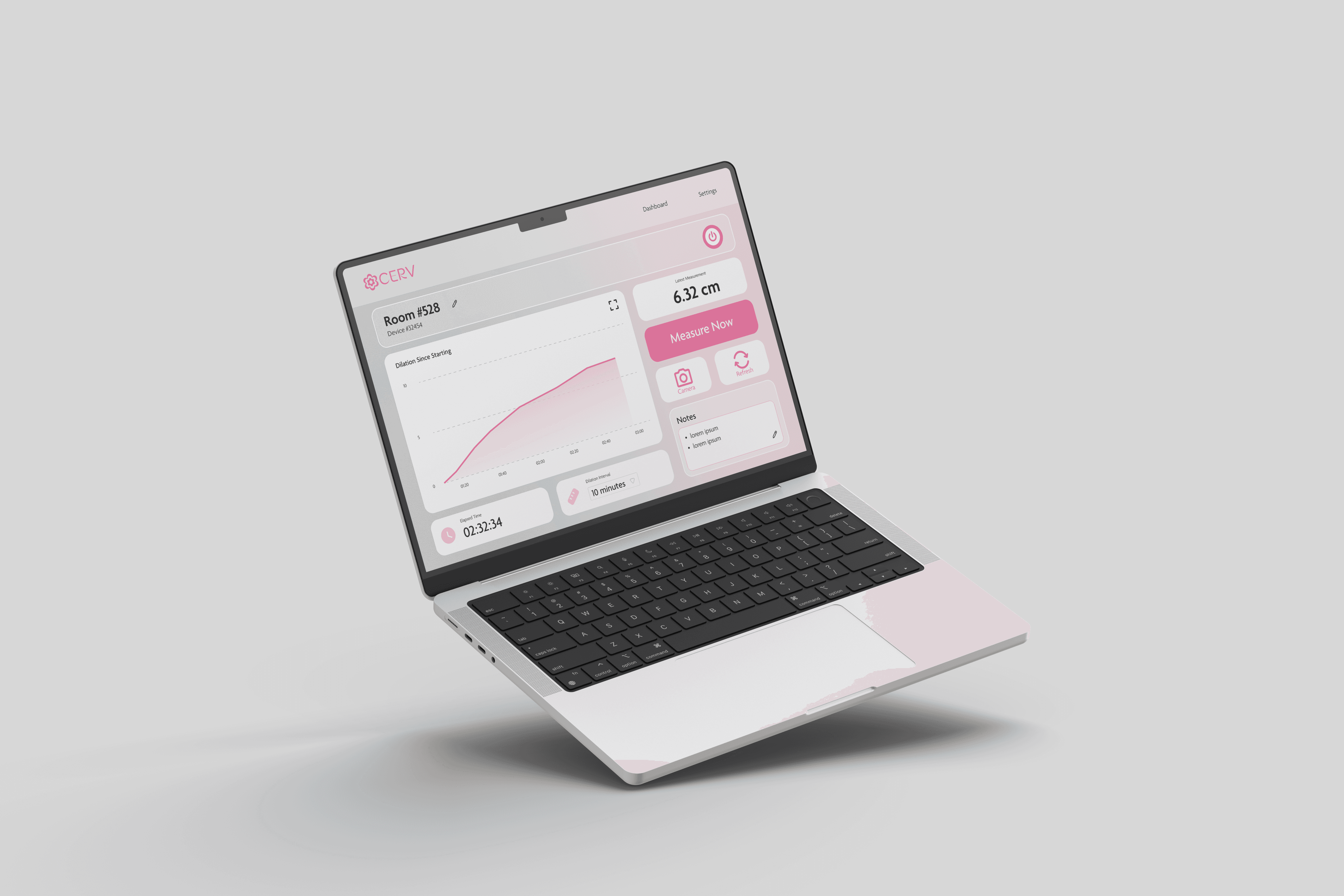
Better Labor Monitoring
CONTEXT: the current measuring technique for cervical dilation is unnecessarily painful and extraneous, with currently no solution. CERV's device aims to lessen pain and increase efficiency by inserting a machine that can comfortably measure cervical dilation and display its output on a digital screen.
Problem
CERV needed a design for the app that would connect to their medical device, and display data but their engineer required help to create a design before she could start building the software.
Objective
We aimed to create a quick working prototype of the app for the Skandalaris Expo and generate investor interest, thus prioritizing information clarity over full functionality.
Research
3 Major Pain Points of OB-GYNs
Current measuring method isn't very objective
Clinicians need full context and information on patient status before deciding next step
Multiple patients and their delivery processes need to be managed in a hectic environment
How might we ensure that measuring cervical dilation can be efficiently optimized for stressed healthcare providers, so doctors don't have to worry about manually managing multiple patients?
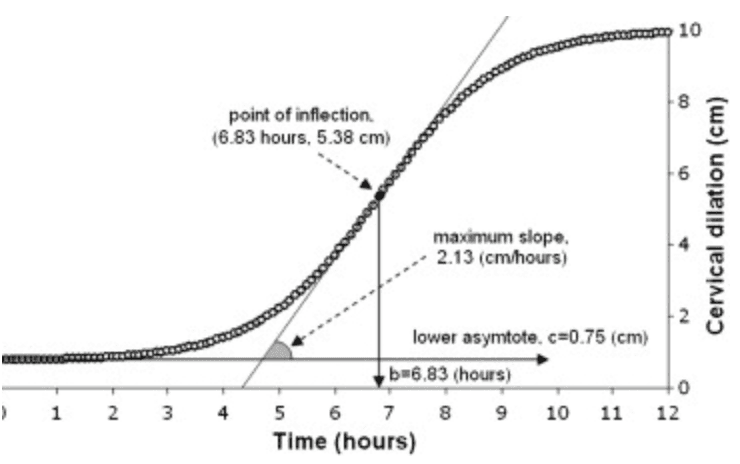
Example of a standardized graph that the CERV team was aiming to replicate + simplify
The ultimate goal: showing potential partners that this device will ultimately decrease the time it takes to inform OB-GYN providers what their next course of action will be.
Solution
Maximizing accessibility under high-stress
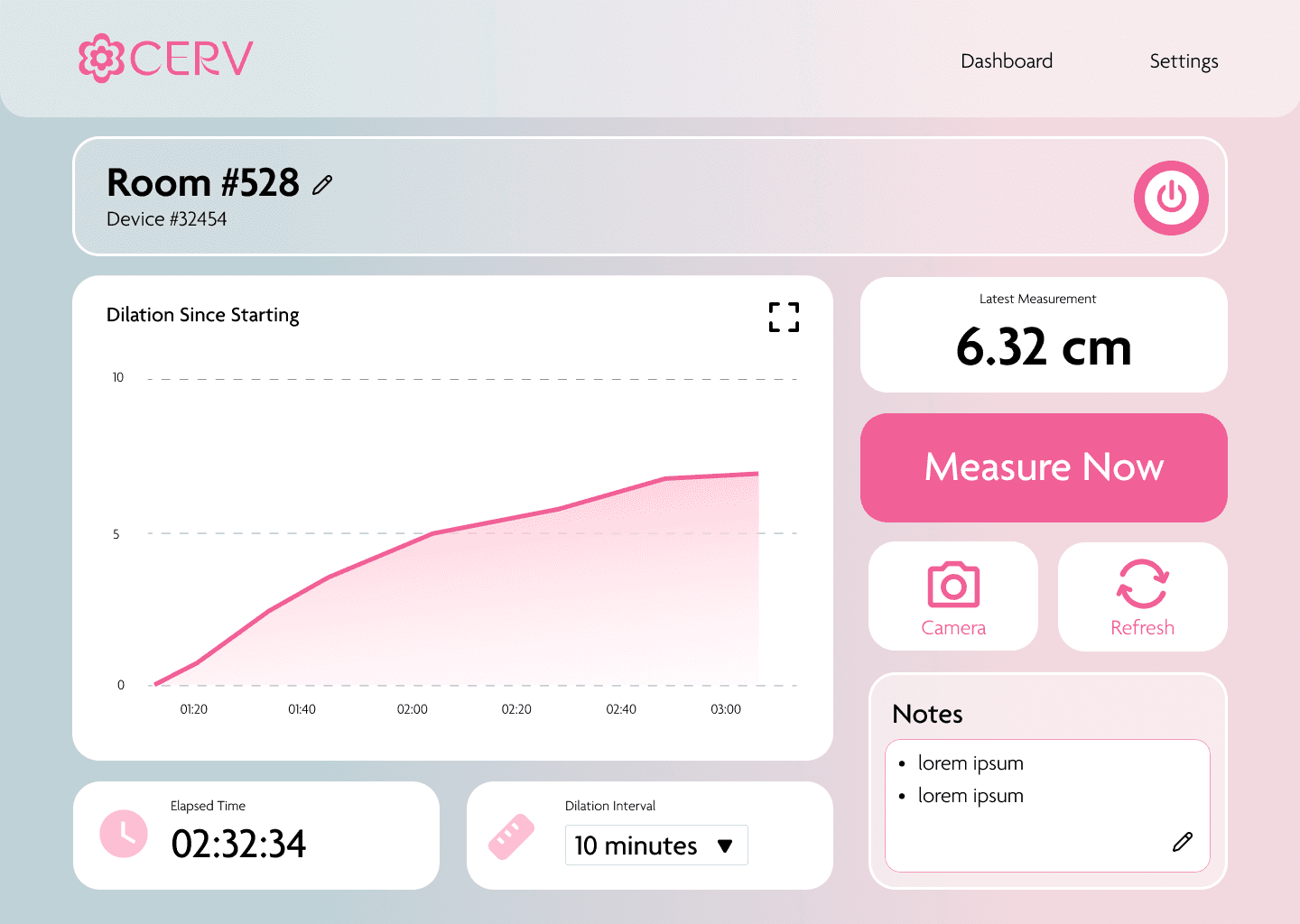
Accessibility
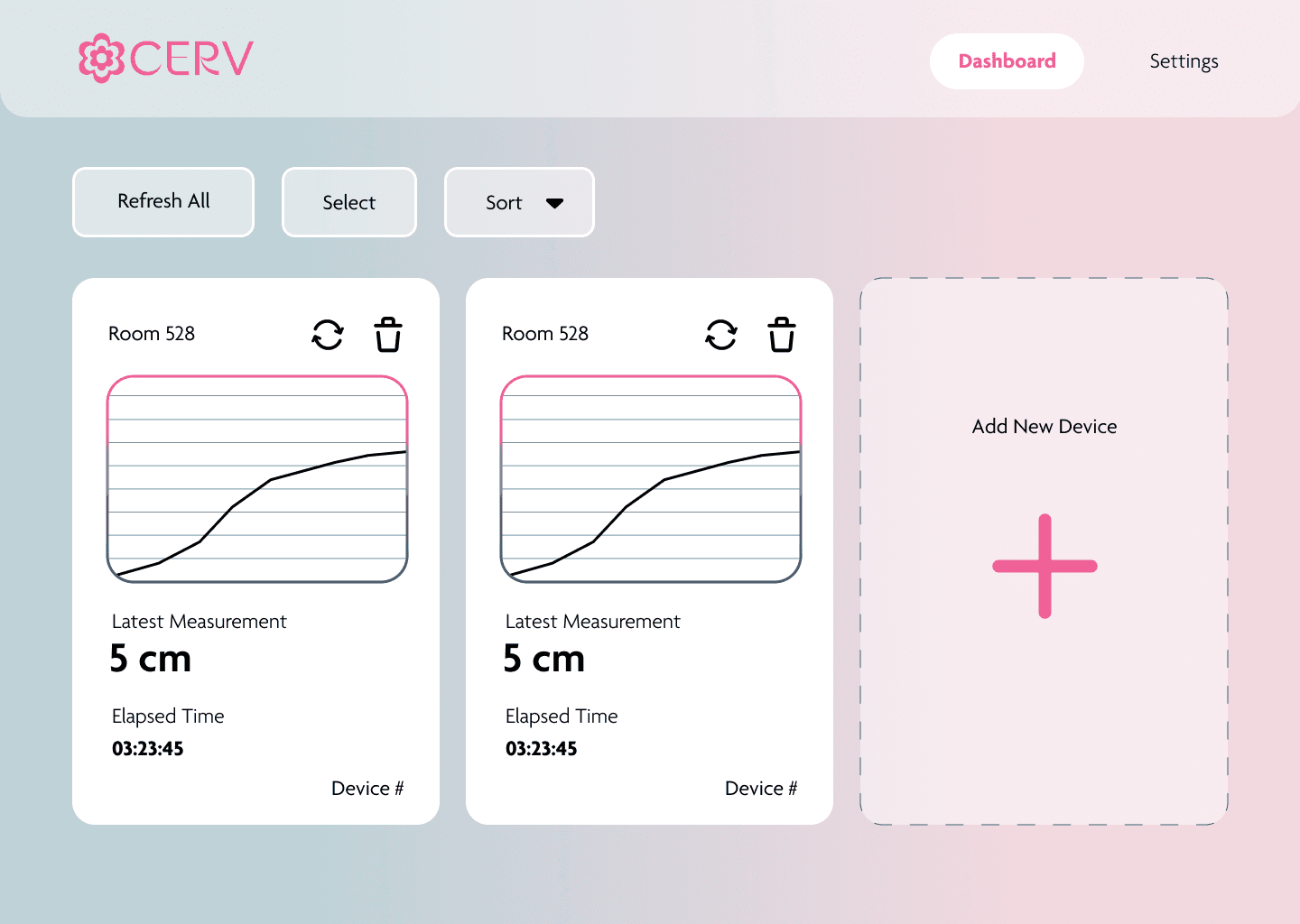
In the context of a high-stress environment, it was paramount that all displays are easy to track. Sample user testing revealed a reduced error rate of 25%.
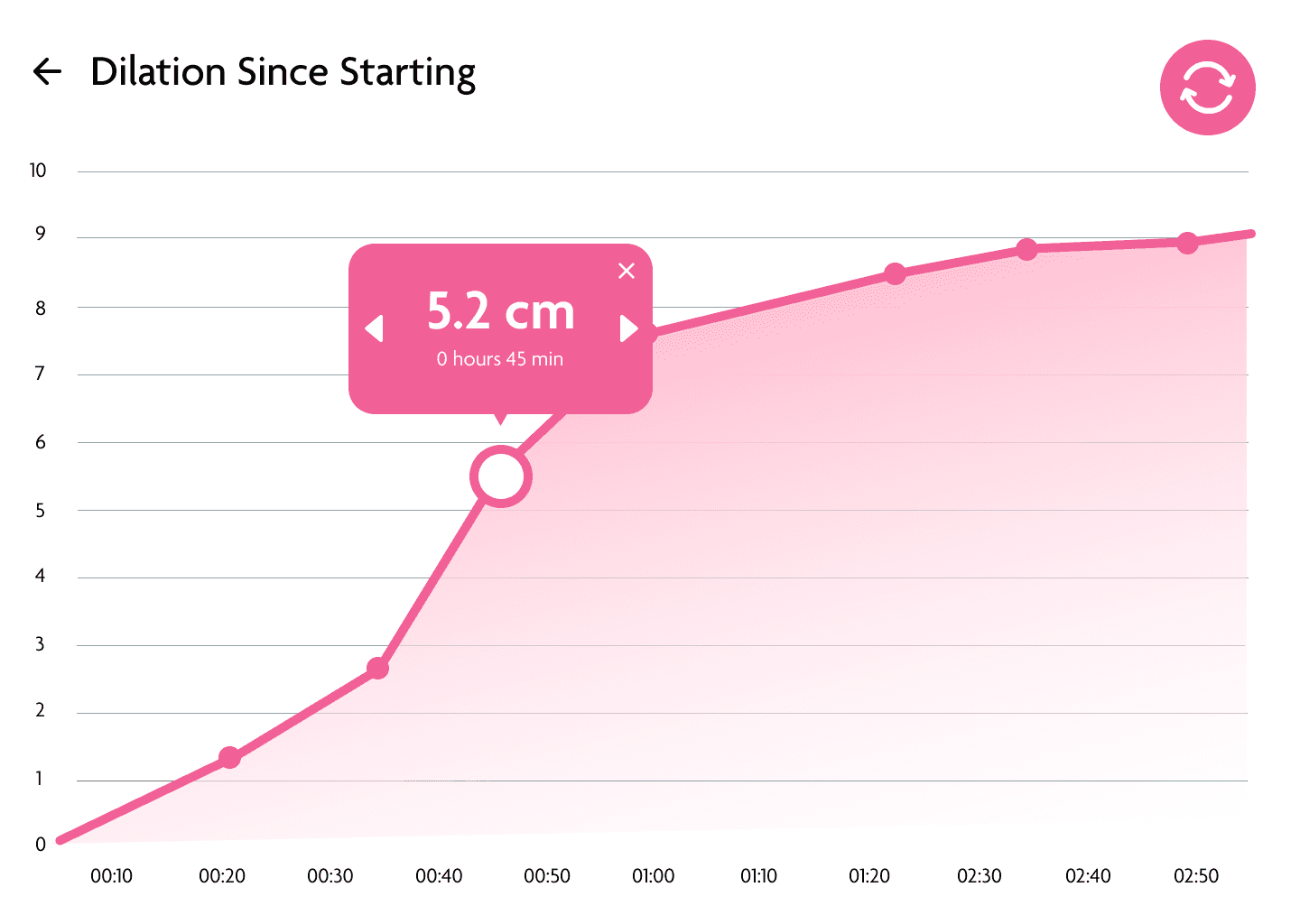
Simplicity
All unnecessary information was cut and icons were utilized so the users' cognitive loads wouldn't be overloaded.
Privacy
Under HIPPA, personal information of the patients is not allowed to be recorded. Each patient is registered as a separate dashboard with designated room and device numbers. Additional notes that can be modified by other verified doctors.
Early Design Decisions
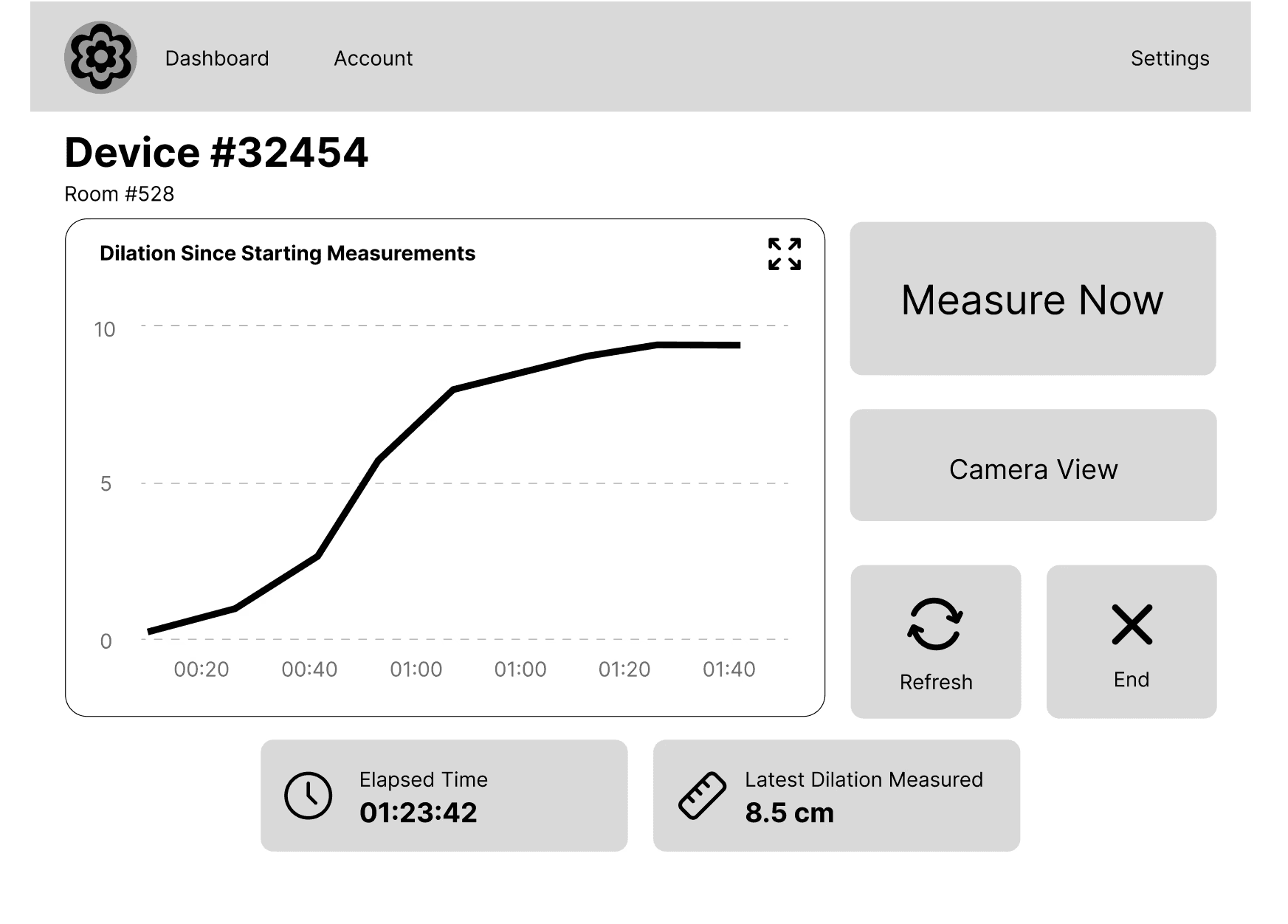
"Latest Measurement" was a datapoint I proposed adding in. Our team later switched priorities to emphasizing this datapoint to inform doctors of their next step.
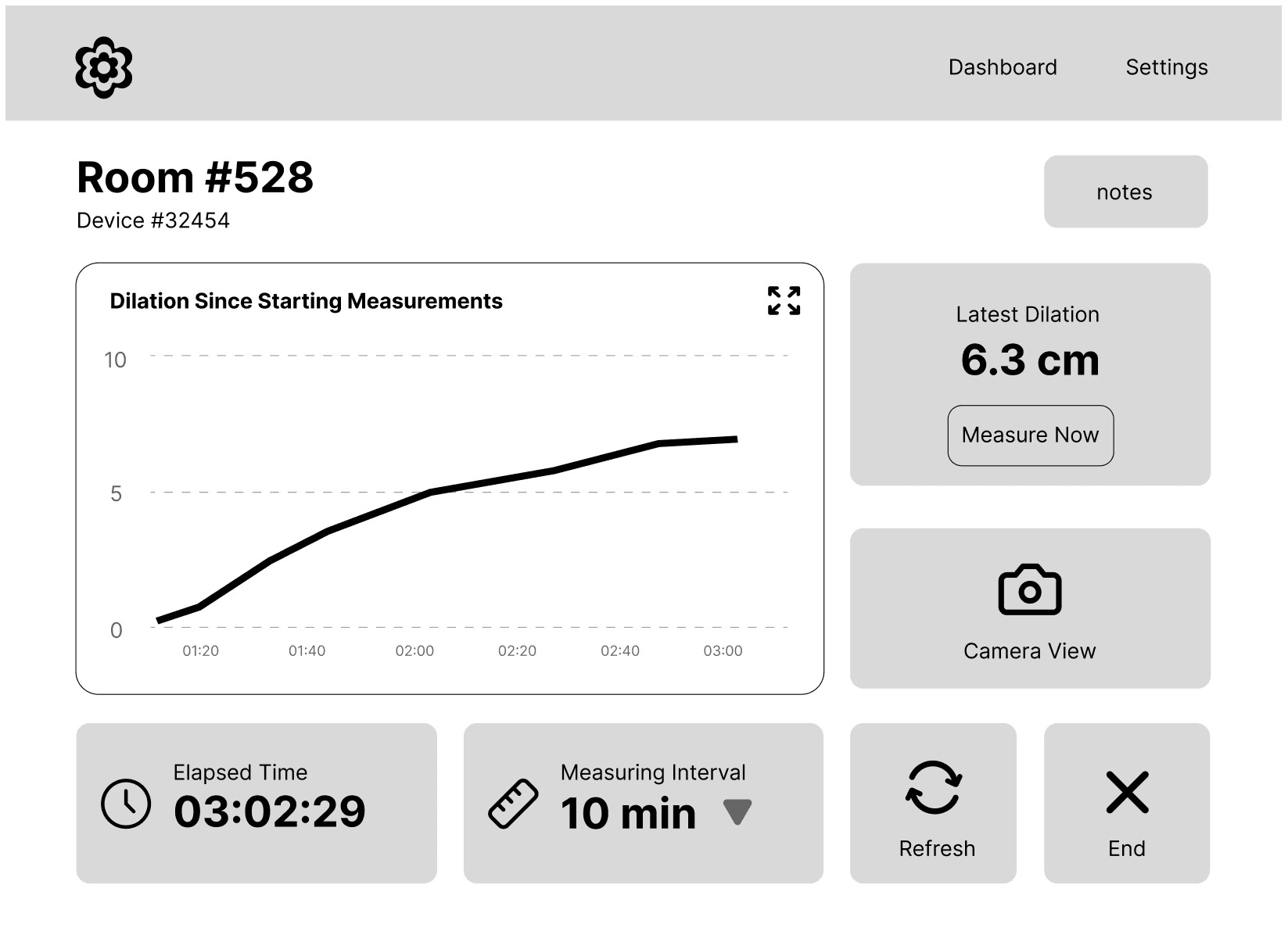
One of the more developed iterations before the final screen. There was still a back-and-forth on balancing the hierarchy of the dilation measurement and the button to take another measurement. I ended up utilizing color and scale to create the screen presented above.
Next Steps?
Though CERV is an earlier stage company, I'd like to measure success metrics through an increase in sales investor calls, a tangible decrease in decision-making time, and overall positive qualitative feedback from target users down the line.
Takeaways
Adapting is key
In the world of health-tech, there are higher stakes, limited room for user error, and a potential limited amount of target test users. I had to quickly learn to adjust, improving my own work efficiency by considering new external factors with every design decision.
information intake is
not universal
Designing dashboards for a specific audience, particularly under stressful circumstances, forced me to refine my approach to information hierarchy and tailor the design language.
the design process
is a toolkit!
Overall, while the process wasn't entirely linear, each step, even those seemingly arbitrary, informed the entire team the next action we should be taking or prioritizing. It helps to take a step back to look at the big picture.